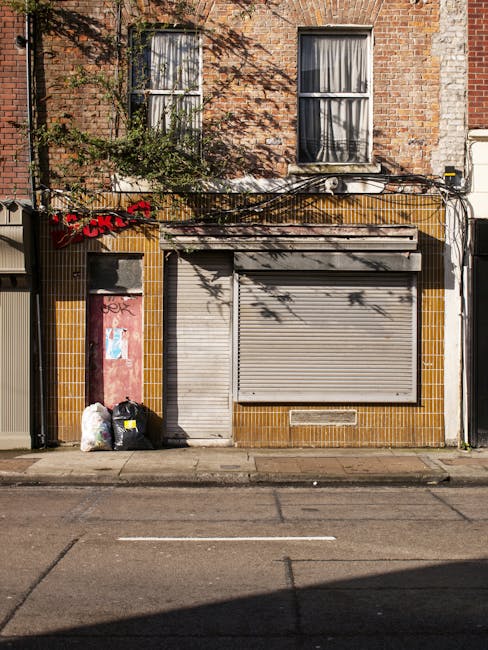
Bermondsey Street rubbish removal guide for SE16 homes
If you live on or near Bermondsey Street, you already know the pattern: a flat starts to feel cramped, a hallway fills with old chairs, or one tidy-up somehow becomes three. This Bermondsey Street rubbish removal guide for SE16 homes is here to make the whole thing less stressful. Whether you're clearing after a move, dealing with builder's waste, or just trying to get a spare room back, the aim is simple: help you choose the right removal route, avoid common mistakes, and get the job done cleanly.
In a busy part of SE16, rubbish removal is not just about getting things out of sight. It is about access, timing, recycling, safety, and knowing what can be removed without fuss. Truth be told, a good plan saves a lot of lifting, a lot of waiting, and usually a lot of regret.
Table of contents
- Why Bermondsey Street rubbish removal guide for SE16 homes matters
- How the rubbish removal process works
- Key benefits and practical advantages
- Who this is for and when it makes sense
- Step-by-step guidance
- Expert tips for better results
- Common mistakes to avoid
- Tools, resources and recommendations
- Law, compliance, standards, or best practice
- Options, methods, or comparison table
- Case study or real-world example
- Practical checklist
- Conclusion
- Frequently asked questions
Why Bermondsey Street rubbish removal guide for SE16 homes matters
Bermondsey Street sits in a part of London where homes are often compact, storage is precious, and access can be a bit awkward. If you are in a flat, townhouse, converted building, or shared property, rubbish removal needs to be practical, not theoretical. A sofa that looks manageable in a living room can feel very different when it needs to pass a narrow stairwell or a shared entrance with neighbours coming and going.
That is why having a Bermondsey Street rubbish removal guide for SE16 homes is genuinely useful. It helps you think through the awkward parts before they become a problem: what type of waste you have, how much there is, whether it needs special handling, and whether a full clearance or a smaller collection makes more sense. It is the difference between a smooth, one-visit job and a half-finished weekend of dragging bags to the kerb and wondering where to put the rest.
There is also the local rhythm to consider. On Bermondsey Street and across SE16, space is limited, neighbours are close, and you often cannot leave items lying around for long. A well-organised clearance keeps hallways clear, avoids clutter building up, and helps you stay on top of property standards. If you are dealing with a larger amount of household waste, the broader waste removal service can be a good starting point when you want one straightforward collection rather than several separate trips.
Key takeaway: the best rubbish removal choice is rarely the biggest truck or the cheapest quote. It is the option that fits your property, your timing, and the type of waste you actually have.
How Bermondsey Street rubbish removal guide for SE16 homes works
At a practical level, rubbish removal is a straightforward process: identify the waste, agree the collection method, prepare the items, and arrange removal. Easy enough on paper. In real life, the useful bit is understanding how the process changes depending on what you are clearing.
For example, a single mattress and a worn armchair are very different from a mixed load of loft clutter, broken shelving, and renovation offcuts. Furniture-heavy jobs may fit better with furniture clearance or furniture disposal, while bulky household clear-outs are often better handled through home clearance or even house clearance if you are dealing with a full property.
For SE16 homes, the key operational questions are usually:
- Can the waste be carried out safely from the property?
- Does it need sorting, dismantling, or bagging first?
- Is there mixed waste, or mostly one category?
- Are there items that need specialist handling?
- How quickly does it need to go?
The answers shape everything else. A bedroom clearance in a Bermondsey Street flat might only need a few strong bags and careful stair movement. A post-refurbishment load may need a more structured approach, especially if it includes plasterboard, wood, tiles, or packaging. For construction-heavy jobs, builders waste clearance is usually the better fit than a generic rubbish collection.
One small but important point: not all "rubbish" is the same. Some items can be reused, some recycled, some need specialist disposal, and some should never be mixed with general household waste. A proper clearance provider should help separate these categories sensibly rather than dumping everything together and hoping for the best. That part matters more than people think.
Key benefits and practical advantages
Good rubbish removal gives you more than a cleaner room. It gives you headspace. That sounds a bit soft, maybe, but if you have ever looked around a cluttered flat after a long week, you will know exactly what I mean.
Here are the most useful advantages for SE16 homes:
- Less stress: no need to hire a van, recruit friends, or make repeated trips to a disposal site.
- Better use of space: useful in Bermondsey Street properties where storage is often limited.
- Safer moving conditions: fewer trip hazards in hallways, stairwells, and shared entrances.
- Faster turnaround: handy when you are moving out, expecting guests, or trying to finish a project.
- Cleaner recycling choices: suitable services can sort reusable and recyclable materials more carefully.
- Less risk of mistakes: especially with appliances, mattresses, bulky furniture, and potentially hazardous items.
There is also a professional side to it. If you are clearing a rental property, preparing a flat for sale, or tidying a home office, a fast and orderly removal helps the whole place feel ready sooner. That can matter in a tight market, or simply when you want your home back without another week of seeing boxes in every corner.
If you are comparing options, take a look at how a provider handles sustainability and sorting. A service with a clear recycling and sustainability approach is usually a better long-term choice than one that only talks about speed. Speed is useful, yes, but not at the expense of care.
Who this is for and when it makes sense
This guide is especially useful if you live in a Bermondsey Street flat, maisonette, converted building, or family home in SE16 and you have waste that is too awkward, too heavy, or too much for normal bins. It also helps if you are trying to decide whether you need a one-off collection or a larger clearance service.
Typical situations include:
- moving house or ending a tenancy
- clearing out a spare room, loft, garage, or storage cupboard
- disposing of broken furniture
- getting rid of appliances that are no longer usable
- post-renovation or DIY waste
- garden tidy-ups and shed clearances
- office clutter from a home workspace
- general decluttering before guests, sale, or refurbishment
For smaller jobs, you may only need targeted help such as mattress and sofa disposal or fridge and appliance removal. For more mixed, room-by-room jobs, flat clearance is often the right middle ground. And if the clutter has somehow spread across the whole property, it may be time to think bigger.
Sometimes the decision is simple. If you can carry it in one go and it fits your own vehicle, fine. If it is heavy, awkward, dirty, or time-sensitive, a proper removal service is usually the calmer choice. Let's face it, nobody enjoys wrestling a fridge around a stair corner on a Sunday morning.
Step-by-step guidance
If you want the smoothest possible rubbish removal in SE16, a little preparation goes a long way. Here is a practical way to handle it.
- Sort the waste into clear groups. Separate general rubbish, furniture, appliances, green waste, builders waste, and anything that looks unusual or potentially hazardous.
- Measure bulky items. Check whether large pieces will fit through doors, lifts, hallways, or stairwells without damage.
- Decide what can be reused or donated. Some items are not rubbish at all, they are just no longer useful to you.
- Identify special items early. Fridges, freezers, mattresses, chemicals, paint, and sharp materials need more care.
- Choose the right service type. A garden tidy-up is different from a loft clear-out, and a builder's load is different again.
- Ask about access and timing. In Bermondsey Street properties, lift access, parking, and shared entrances may affect how the job is planned.
- Prepare the area. Move fragile items, clear the route, and if possible keep pets and children away during collection.
- Confirm payment and scope. Make sure you understand what is included before the team arrives.
A sensible approach is to start by comparing the nature of the waste rather than just the size of the pile. For instance, a small pile of heavy rubble may be more awkward than several bin bags of lightweight clutter. That is why a transparent quote matters. If you want to see how service pricing is explained, the pricing and quotes page is a useful reference point.
If you are doing this for a whole property, a service like house clearance can often streamline the process because it is designed around mixed contents, not just one item category. It saves a lot of back-and-forth. And a bit of back-and-forth is exactly what you do not want on a busy street.
Expert tips for better results
After enough clearances, a few patterns become obvious. The easiest jobs are not always the smallest ones. They are the ones where the waste is sorted, access is clear, and the customer knows what needs to go. Simple, but true.
Here are some expert tips that genuinely help:
- Photograph everything first. A few clear photos can help you explain the job properly and reduce surprises.
- Dismantle where sensible. Flat-pack furniture, bed frames, and shelving are easier to move when broken down.
- Keep hazardous items separate. Do not bury paint, chemicals, or sharp objects under general rubbish.
- Bundle similar items together. It helps the team work faster and keeps the collection tidy.
- Check building rules if you rent or live in a managed block. Access and collection times sometimes matter more than you expect.
- Think in zones. Hallway, loft, balcony, cupboard, and storage areas can each be tackled in turn.
If your waste includes older paperwork, private files, or sensitive paperwork from a home office, confidential shredding is worth considering. It is one of those small safeguards people often forget until the pile is already in front of them.
And one honest tip from experience: leave yourself a little breathing room. If you think the clearance will take two hours, plan as though it might take three. Not because things go wrong, but because real homes rarely behave like neat catalogue rooms.
Common mistakes to avoid
Most rubbish removal problems come from rushing the plan. The good news is that they are easy to avoid once you know what to watch for.
- Mixing everything together blindly. This can make recycling harder and create issues with specialist waste.
- Underestimating bulky items. A sofa, mattress, or old appliance is rarely as simple as it looks.
- Forgetting access problems. Narrow stairs, restricted parking, or lift use can affect the whole job.
- Ignoring specialist disposal needs. Fridges and freezers, for example, should not be treated like general rubbish.
- Leaving the booking until the last minute. That is how people end up with clutter in the hallway and no clear plan.
- Choosing purely on price. The cheapest option is not always the best value if it causes delays or confusion.
Another common slip is assuming all clearance services handle all waste in the same way. They do not. A garage pile, a garden pile, and a home declutter each have different practical demands. If you are cleaning out outdoor spaces, garden clearance can be more suitable than a general collection. If it is a space full of tools, old paint tins, and random "useful" bits from ten years ago, garage clearance may be the better route. You know the sort of place. One box of screws, three broken lamps, and a mystery cable no one recognises.
Tools, resources and recommendations
You do not need a huge toolkit to manage a good clearance, but a few simple items help more than you might think.
- Heavy-duty bin bags: useful for mixed household waste and light breakables.
- Labels or marker pens: helpful for sorting items into keep, donate, recycle, and remove.
- Gloves: essential if you are moving dusty, sharp, or grubby items.
- Tape measure: handy for checking bulky furniture and appliance dimensions.
- Furniture sliders or a sack truck: useful for heavier items where floor protection matters.
- Phone camera: practical for documenting the load before collection.
In terms of service choice, it helps to match the job to the right category. A few sensible pairings are:
- loft clearance for upstairs storage clutter and forgotten boxes
- furniture clearance for bulky household items and old furnishings
- home clearance for general decluttering and mixed household contents
- builders waste clearance for renovation debris, timber, and site leftovers
If you want to understand what can and cannot go into a mixed load, the page on what can go in a skip is a helpful guide even if you are not hiring a skip directly. It gives you a decent framework for thinking about separation and load types. Not glamorous, perhaps, but useful.
Law, compliance, standards, or best practice
Rubbish removal in London should be handled carefully and responsibly. You do not need to memorise legislation, but you do need to understand the basics of safe and lawful disposal. In simple terms, the person or company removing waste should handle it in a way that protects people, property, and the environment.
Best practice usually includes:
- sorting waste so recyclable items are separated where possible
- keeping hazardous or specialist items away from general rubbish
- moving items safely through the property without causing damage
- using appropriate protective equipment where needed
- handling waste with proper care rather than leaving it dumped or unsecured
For items that carry higher risk, like broken appliances or anything potentially hazardous, specialist handling is the safer route. That is why dedicated pages such as hazardous waste disposal and fridge and appliance removal exist separately. A fridge is not just "big rubbish"; it is an item with handling considerations, and that distinction matters.
It is also sensible to look at how a provider approaches safety and responsibility. Resources such as health and safety policy, insurance and safety, and payment and security can help build trust before you book. These details are not flashy, but they tell you whether the operation is run carefully or just winging it.
Options, methods, or comparison table
Different rubbish removal methods suit different SE16 homes. Choosing well saves time, money, and a surprising amount of hassle.
| Method | Best for | Strengths | Watch-outs |
|---|---|---|---|
| One-off rubbish removal | Small to medium mixed loads | Quick, flexible, minimal planning | Can be less efficient for very large jobs |
| Flat clearance | Flats, apartments, and smaller homes | Good for limited space and bulky items | May need careful access planning |
| House clearance | Whole-property declutters | Covers mixed contents in one go | Needs clear instructions to avoid confusion |
| Furniture disposal | Bulky furniture only | Simple for sofas, beds, tables, and cabinets | Not ideal for mixed waste loads |
| Builders waste clearance | Renovation and DIY debris | Better suited to heavy, dusty, mixed trade waste | Specialist sorting may be needed |
For many Bermondsey Street homes, the real decision is between a general clearance and a more targeted service. If the load is mostly furniture, use a furniture-specific route. If it is a cluttered flat with a bit of everything, broader clearance is often simpler. If the place smells faintly of old cardboard and dust in the morning light, that is usually your sign to stop overthinking and just get it booked.
Case study or real-world example
Picture a SE16 flat with two bedrooms, one storage cupboard, and a hallway that has slowly become the default parking space for old belongings. Nothing dramatic. Just life piling up, one box at a time. There is a broken desk, a mattress that no longer fits the room, a couple of dining chairs, some bags of mixed clutter, and an old fridge in the corner of the kitchen.
In that kind of situation, the best result usually comes from splitting the job into categories rather than treating it as one anonymous pile. The mattress and sofa items go into their own disposal route, the appliance is separated, and the remaining mixed contents are handled as a clear-out. If there are a few extra loft boxes or spare-room items, those can be grouped into the same visit. It sounds very ordinary, but ordinary is what works.
The big advantage is that the flat ends up cleared with less disruption. The hallway is not blocked for long. The lift, if there is one, is used efficiently. Neighbours are not left wondering why a sofa has been balancing by the door since Tuesday. And the resident gets the calm relief of seeing the room open up again. That moment when the carpet is visible? Surprisingly satisfying.
For homes that need a fuller reset, flat clearance or home clearance usually gives the cleanest outcome because the job is planned around the property rather than around random items.
Practical checklist
Use this checklist before your collection or clearance day.
- Sort waste into groups: furniture, general rubbish, appliances, garden waste, builders waste, and anything hazardous.
- Measure bulky items and check access through doors, lifts, and stairs.
- Remove personal items from drawers, cupboards, and shelves.
- Keep any confidential papers separate for shredding.
- Protect floors and walls if you are moving items yourself.
- Confirm what is included in the collection.
- Make sure parking or access arrangements are clear.
- Keep pets and children away from the working area.
- Set aside items you want to reuse, sell, or donate.
- Have payment details ready and check the final process in advance.
If you want a cleaner process from the start, the book online option is a simple next step. And if you prefer to learn more about the people behind the service first, the about us page is there too. No mystery, no drama.
Get a free quote today and see how much you can save.
Conclusion
The best Bermondsey Street rubbish removal guide for SE16 homes is not about moving waste as fast as possible. It is about making smart choices: sorting items properly, choosing the right service type, and avoiding the little problems that turn a quick job into a long one. Once you do that, the whole process becomes much easier.
Whether you are clearing one bulky item or tackling a full flat, a bit of planning gives you a cleaner result and a calmer day. And honestly, that is often what people want most: not just empty rooms, but a proper sense of reset. A fresh start feels different when the clutter has gone.
There is something oddly satisfying about standing in a space that finally breathes again. That's the goal, really.
Frequently Asked Questions
What is the best rubbish removal option for a Bermondsey Street flat?
It depends on what you are removing. For mixed household items, flat clearance or home clearance is often the most practical. For bulky items only, a furniture-specific service may be enough.
How do I know if I need a full clearance or just a one-off collection?
If the waste is limited to a few items, a one-off collection can be fine. If multiple rooms are involved, or there are several different waste types, a fuller clearance is usually easier and cleaner.
Can old sofas and mattresses be removed together?
Yes, but they are often handled as a separate category because bulky fabric items need specific disposal planning. Mattress and sofa disposal is the safer and simpler route.
What should I do with an old fridge or freezer?
Do not put it out with general rubbish. Fridge and appliance removal is the better option because appliances need proper handling and processing.
Is builders waste different from household rubbish?
Yes. Builders waste usually includes heavier or dustier materials like timber, plasterboard, rubble, tiles, and packaging. It is better treated as builders waste clearance than mixed domestic waste.
How can I make rubbish removal cheaper?
Sort your items beforehand, separate specialist waste, and make access easy. Clear routes and well-grouped waste usually make the job more efficient.
What happens if I have confidential papers or records?
Keep them separate and use confidential shredding rather than putting them into general waste. It is a simple step, but an important one.
Do I need to sort recyclable items before collection?
It helps, yes. Good sorting can improve recycling outcomes and reduce confusion on the day. Even if the service can sort for you, pre-sorting is still a smart habit.
Can I use rubbish removal for a garage or loft clear-out?
Absolutely. Garage clearance and loft clearance are both common jobs, especially in homes where stored items have quietly piled up over the years.
What is the main mistake people make with rubbish removal in SE16?
The biggest mistake is underestimating access and item type. People often focus on the pile size and forget stairs, lifts, parking, and special waste categories.
Is it better to clear everything in one go?
Usually, yes, if the property and access allow it. One well-planned visit is often easier than several small ones, especially in a busy residential street.
How do I choose a trustworthy provider?
Look for clear pricing, sensible safety information, and a straightforward approach to waste handling. Pages such as insurance and safety, health and safety policy, and recycling and sustainability are useful trust signals.
What should I do on the day of collection?
Keep the route clear, separate items that are staying, and make sure someone is available if access needs explaining. A calm five-minute check before the team arrives can save a lot of faff.
If you are ready to get started, choose the service that matches your waste, your space, and your timing. That simple match is what makes the whole thing work well, and makes life in SE16 feel a bit lighter.