Commercial Waste Removal in Bermondsey
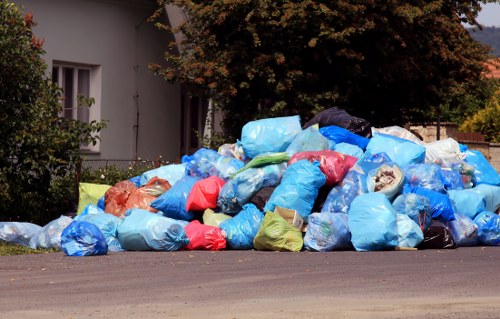
Commercial waste removal in Bermondsey needs a practical service that keeps business premises clear without disrupting the working day. We handle recurring and one-off collections for shops, offices, workshops, hospitality venues and managed premises, with a focus on separating reusable, recyclable and residual material where that is appropriate. The aim is straightforward: remove unwanted commercial waste in a controlled way, keep access usable and leave the area ready for normal activity.
Our service covers a wide range of business waste streams, from everyday mixed rubbish to heavier items that need careful loading and disposal. For many customers, the main benefit is having a single arranged collection that fits the size of the job rather than trying to coordinate several different removals. If you want to compare the likely scope first, pricing and quotes is a sensible place to look before you request a quotation.
For a more general overview of the service, you can also read about our business waste removal options alongside the broader waste removal page. Those pages help explain how commercial waste differs from household clearance, especially where access, load type and sorting all affect how the work is organised. When you are ready to move on, use the contact route that suits you best and ask for a quotation in plain terms.
What our commercial collections cover
Commercial waste is not just one category. A good collection plan often has to deal with bulky office furniture, packaging, broken equipment, storage-room clutter, archive material and general rubbish all at once. We can remove mixed commercial waste where it is safe and lawful to do so, and we can also deal with individual items that need separate handling because of their size or material. The most useful approach is usually to match the collection method to the actual waste profile, rather than forcing everything into the same process.
Where businesses need a more itemised service, we can help with specific categories such as office clearance, furniture clearance and fridge and appliance removal. Those services are relevant when the main task is not just general rubbish, but the removal of desks, chairs, cabinets, units or electrical appliances that cannot simply be left out for ordinary collection. Clear identification of the load helps us plan suitable labour, transport and disposal routes.
In some premises, waste builds up in places that are awkward to reach or disruptive to empty during trading hours. That can include back rooms, upper floors, shared entrances, loading bays and storage areas with limited access. Careful lifting and route planning matter here, because the collection needs to be efficient while still protecting the property and keeping the premises usable. If your business has a specific pattern of waste, it is usually better to describe the material than to focus only on the volume.
Choosing the right service for your premises

Different businesses generate different waste streams, so the right service depends on what you need cleared and how often. A retail unit may need the removal of packaging, stock-room waste and display items, while a workspace may mainly need old office furniture and general rubbish taken away. Some businesses also need separate handling for confidential material, which is why confidential shredding can be relevant where paper records and sensitive documents form part of the load.
For premises with more specific disposal needs, we also provide services such as mattress and sofa disposal and garage clearance. These may seem outside a strict commercial setting at first glance, but they become useful where a business stores soft furnishings, fixtures or general overflow items in ancillary spaces. The key point is to select the page that best matches the actual waste mix so the enquiry is accurate from the start.
Useful preparation is simple: identify the main items, note any access restrictions and separate anything that must not be removed with ordinary waste. If photographs are available, they can help explain the job more clearly, but a written description is still valuable on its own. Book online if you already know what needs removing; otherwise keep it brief and ask for a quote based on the items and access involved.
Handling bulky items and mixed loads
Commercial collections often involve a combination of loose rubbish and larger objects that must be carried out in stages. That might include shelving, broken fixtures, packaging, office chairs, surplus stock containers or worn-out furnishings. We approach these jobs with the aim of removing the full load efficiently while keeping the work area as orderly as possible. Where items are reusable or recyclable, sorting can reduce the amount sent for disposal, subject to the nature and condition of the waste.
Our related disposal pages can be helpful when the waste is more specific. For example, furniture disposal is a practical option for desks, cabinets and other business furnishings, while home clearance and house clearance may matter where a property is being emptied for mixed personal and business reasons. Although those are not the same as a dedicated commercial collection, they show how different load types are treated within a wider waste service.
Some jobs also include waste that is awkward because of its weight, shape or placement. That is where the workforce and vehicle arrangement matter, especially if the material needs to be moved through narrow corridors or shared access points. Keep in mind that the quotation should reflect the actual load, not just the headline category, because two jobs with the same label can need very different levels of handling.
Commercial waste sorting and responsible disposal
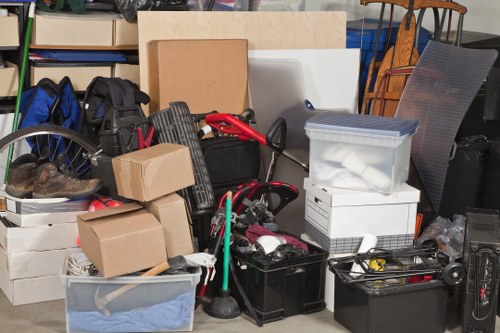
Many business customers want a collection service that does more than simply take items away. Sorting matters because it helps separate recyclable material from general waste where this is feasible and lawful. Paper, cardboard, metal, plastics, appliances and mixed office items may each need a different route depending on condition and composition. We work with that in mind, so the collection can be organised sensibly rather than treated as a single undifferentiated load.
Recycling and sustainability explains how waste streams may be handled with recovery in mind, while health and safety policy and insurance and safety set out the way risk is approached during the work. These pages are useful when a business wants to understand how collections are controlled, especially where the waste includes heavier items or there are shared access areas to protect. The service itself remains practical, but the method matters as much as the end result.
Some collections involve items that require extra care because of their composition or potential impact if handled incorrectly. In those cases, the service must follow the relevant disposal route rather than assuming that every object can be loaded together. That is why accurate descriptions are helpful: they support the safest and most efficient planning, and they make it easier to avoid surprises once the team arrives to carry out the removal.
Office and workplace clearances
Offices often create waste in several layers: day-to-day rubbish, redundant furniture, old electronics, archive boxes and occasional refurbishment debris. A workplace clearance usually works best when these streams are considered together, because the collection plan can then account for access, stairways, lifts, loading arrangements and the order in which items should be taken out. A tidy and methodical approach is often more effective than trying to remove everything in one generic sweep.
Where the work is mainly interior and tied to desks, storage and room contents, our office clearance page is the most relevant starting point. For businesses refreshing work areas rather than vacating them completely, that service can sit alongside a targeted furniture clearance so only the redundant items are removed. If electronic equipment is part of the load, it is worth identifying it separately in the enquiry so the collection can be arranged appropriately.
Businesses sometimes overlook the small but time-consuming items, such as loose cables, broken accessories, packaging from new fit-outs and mixed stationary waste. These are rarely the headline part of a job, yet they affect the amount of time needed for sorting and loading. It helps to think in terms of the whole workspace rather than just the obvious furniture, because a clearer picture usually leads to a better-matched quotation.
Clearance for storage spaces and overflow areas

Storage areas can become a mix of broken stock, old packaging, unused fixtures and items that have been put aside for later but never reused. A clearance in this setting is often about regaining usable space without disturbing the parts of the premises that still need to function. That can include rooms at the back of a business, cages, cupboards, garages used for business storage or other overflow areas where waste has accumulated gradually.
Our loft clearance and flat clearance pages are useful examples of how access and contents shape the work, even when the setting is not a home. In a business context, similar principles apply: the route in, the number of items, and the level of sorting all affect how the removal is planned. Where there are heavy or awkward objects, the collection should reflect that from the outset rather than being treated as a simple bin load.
If the storage area includes mixed items that could be reused, recycled or disposed of separately, it is worth making that clear in the enquiry. A precise description helps us decide what resources the job may need and whether the collection can be completed in one visit. That is often the difference between a broadly worded request and a quotation that actually fits the work.
About Bermondsey
Bermondsey is an area in the London Borough of Southwark, lying on the south bank of the River Thames and historically known for its riverside setting, warehouses and food trade. Its name is closely associated with the old Bermondsey Abbey site, which once stood near the river and helped shape the district’s early development. The area later became known for industrial activity, tanning, leather working and other river-linked trades, and traces of that history still appear in the street pattern and surviving buildings. Bermondsey Street is one of the best-known historic routes, lined with converted warehouses, small galleries, independent businesses and eating places that reflect the area’s changing character. Nearby landmarks include the White Cube gallery, the Fashion and Textile Museum and the riverside paths that connect the district with Tower Bridge and neighbouring parts of central London. The area also includes green and open spaces such as Southwark Park, which provides a broad contrast to the denser built-up streets around it. Bermondsey has long combined older industrial fabric with newer residential and commercial development, creating a landscape where restored buildings, modern housing and active local streets sit close together. That mix gives the area a distinct identity within inner south London, with a history tied to the river but a present shaped by varied uses, walking routes and local cultural activity.
Planning a collection that fits your schedule
Timing matters for commercial waste removal because businesses often need the work to fit around opening hours, deliveries, staff movement and customer access. The most helpful enquiry is one that sets out what needs removing, how it is located and whether the space can be accessed easily. If you already know the main items, list them clearly; if not, a short description of the room or storage area may still be enough to start the quotation process. The objective is to make the job easy to understand before anyone attends.
When the waste is mixed, it can help to separate the load into broad groups such as furniture, general rubbish, documents, appliances or building-related material. That does not mean you need to sort everything perfectly in advance, but it does give a better picture of the work involved. For regulated or sensitive material, check the relevant service page first so you are asking for the right kind of removal rather than a generic collection that may not fit the waste stream.
Call if you are ready to compare the job scope, or send a simple enquiry if you want the waste assessed before booking. If you prefer to review the service range first, about us and contact us are the main next steps for a quotation request and further information.
Other useful waste pages for businesses

Some commercial enquiries include a mix of ordinary waste and specialist items, so it can be useful to know which page best matches the load. builders waste clearance is relevant where a refurbishment or fit-out leaves rubble, offcuts or construction debris, while garage clearance may suit businesses using ancillary spaces for stored equipment or surplus material. Choosing the closest match helps describe the job more accurately and reduces the risk of overlooking an important part of the waste.
We also provide information on hazardous waste disposal, although this requires careful review because not every item can be treated as ordinary commercial waste. If your load includes anything potentially hazardous, identify it clearly before requesting a quotation so the right handling route can be considered. That same principle applies to unusual items, where clear description is better than broad assumption.
For straightforward next steps, keep the enquiry focused on the waste itself, any access constraints and the type of premises involved. A concise description is often enough to begin. When you are ready, ask for a quotation and we will help match the collection to the work that actually needs doing.